Phase I Underway · 5,585 days since Census 2011Phase I · 5,585 days since Census 2011

Census 2027

India's Biggest Data Update in a Generation

Track the timeline. See where India stands since 2011. Be the first to explore Census 2027 data — mapped at the district level.

Join 500+ researchers tracking Census 2027

or

Census 2027 Announced

16 Jun 2025

MHA gazette notification issued. India's first digital census confirmed — with caste enumeration for the first time since 1931.

Phase I: Houselisting & Housing Census

1 Apr – 30 Sept 2026

Housing conditions, amenities, assets, and digital address tagging for every household in India.

Underway

Phase II: Population & Caste Census

1 Feb – 31 Mar 2027

Full head count plus the first caste census since 1931 — covering OBC, SC, ST, and general categories.

Data Processing & Verification

Apr 2027 – Jun 2028

Cross-checking, tabulation, and quality assurance across 800+ districts.

Provisional Results

Jul 2028 – Mar 2029

National and state-level population totals, growth rates, and key demographic indicators.

Full District-Level Data Release

Apr 2029 – Dec 2030

Detailed tables for all districts. SpatialIndia integrates within days of release.

India grew, but where?

Highest MSME Density

1. Niuland, NL1194.4
2. Jiribam, MN674.5
3. Saitual, MZ628.9

Lowest MSME Density

1. Bichom, AR1.0
2. Mauganj, MP4.1
3. Salumbar, RJ4.1
Explore night-time lights →

Health transformed — but not everywhere

35.5%national average child stunting (NFHS-5)

Highest Stunting

1. Saraikela-Kharsawan, JH60.6%
2. West Singhbhum, JH60.6%
3. Eastern West Khasi Hills, ML59.0%

Lowest Stunting

1. Jagatsinghpur, OD13.2%
2. Puri, OD13.8%
3. Lower Dibang Valley, AR14.3%

"Census 2027 will tell us if these districts improved — or fell further behind."

Explore NFHS-5 health data →

Female literacy gap

65.46%female literacy rate (Census 2011) vs 82.14% male

Largest Gap

1. Sawai Madhopur, RJ28.6% pts
2. Karauli, RJ27.3% pts
3. Tonk, RJ26.6% pts

Smallest Gap

1. Pathanamthitta, KL0.2% pts
2. Serchhip, MZ0.4% pts
3. Kottayam, KL0.7% pts
See female literacy gap by district →

When Census 2027 data drops, you'll see it here first.

Join 500+ researchers tracking Census 2027

Population & Demographics

Census 2011

1.21 billion people across 640 districts

Census 2027

800+ districts, first count in 16 years — expected to show massive urbanisation shifts

See population map →

Caste Census (First Since 1931)

Until now

Only SC/ST populations counted — no OBC data at all

Census 2027

Full caste enumeration including OBC for the first time in 96 years

Implications: reservation policies, welfare targeting, political representation

See SC/ST data →

Digital-First Data

Census 2011

Paper forms, manual tabulation, years-long data release

Census 2027

Mobile app collection, GPS-tagged households, faster data release expected

See the full timeline →

Delimitation — Redrawing India's Political Map

Lok Sabha seats have been frozen at 1971 population levels. Census 2027 data could trigger the first seat redistribution in over 50 years — potentially shifting political power from slower-growing southern states to faster-growing northern ones.

Explore state data →

Caste Census — Data for 95-Year-Old Debates

India's reservation system and welfare programs are built on caste data from 1931. The first full caste enumeration in nearly a century will provide the evidence base for one of India's most consequential policy conversations.

Explore SC/ST data →

Women's Reservation Implementation

The Women's Reservation Act (2023) reserves one-third of Lok Sabha and state assembly seats for women — but implementation requires delimitation data from a new Census. Census 2027 is the trigger.

See gender data by district →

Development Planning & Resource Allocation

Government budgets, welfare program targeting, and infrastructure planning all depend on Census data. For 16 years, India has allocated resources based on 2011 numbers — while the ground reality has transformed.

Explore all datasets →
1.46Bestimated population today
800+districts to be enumerated
95 yrssince last caste census

When is the next census in India? It's already underway. Census 2027 Phase 1 — the houselisting and housing census — began in April 2026 across all states and union territories. The full population enumeration follows in early 2027. This is India's first census in 16 years, the longest gap since the decennial exercise began in 1881.

The Census 2027 India date marks more than a head count. For the first time since 1931, a full caste enumeration will cover all categories including OBC — data that underpins reservation policies, welfare allocation, and political representation. The census 2027 caste enumeration is expected to reshape decades-old policy debates with fresh evidence.

Delimitation after Census 2027 carries equally high stakes. Lok Sabha seats have been frozen at 1971 population levels for over fifty years. The new data could trigger the first redistribution since then, potentially shifting parliamentary representation from southern states with slower population growth to faster-growing northern states. Combined with the Women's Reservation Act — which requires delimitation data to implement — Census 2027 will redraw India's political map in ways not seen in a generation.

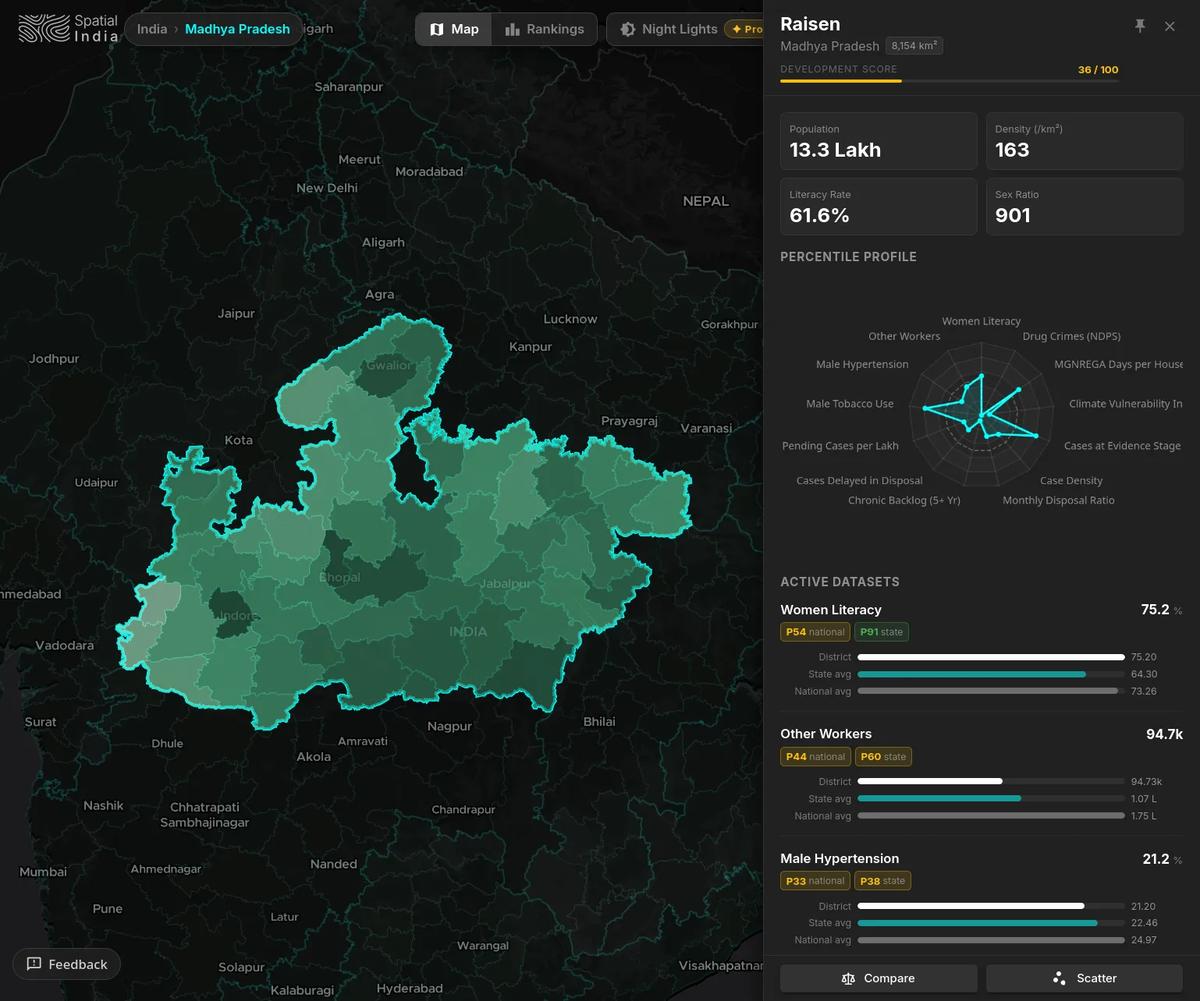
Interactive choropleth map of India

Day-One Interactive Maps

Our architecture ingests Census 2027 data the moment it's released. Every district, every indicator — mapped and explorable within days, not months.

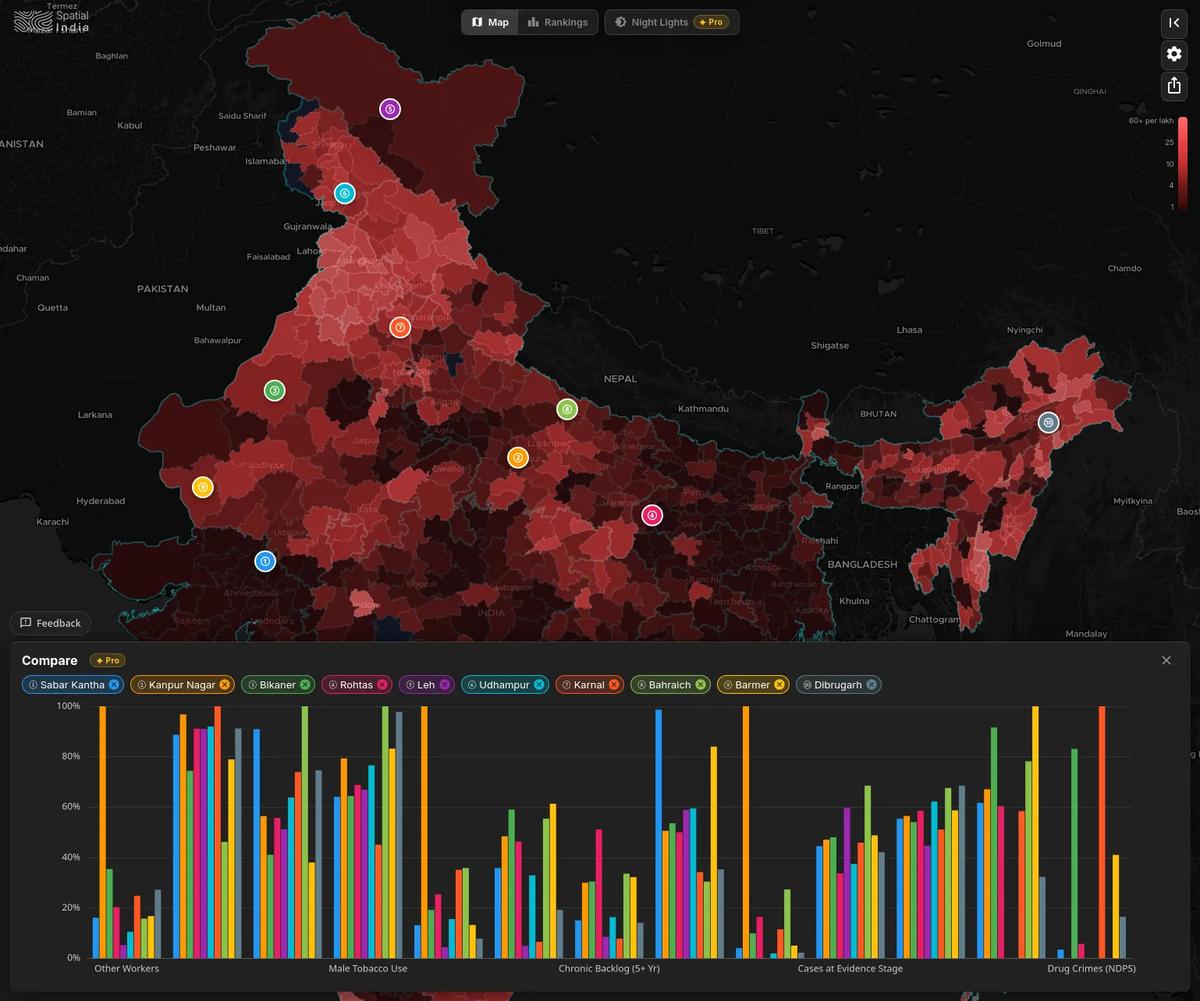
District comparison view

2011 vs 2027 Change Analysis

See which districts grew, which shrank, where health improved and where it didn't — all in side-by-side and overlay views built for comparison.

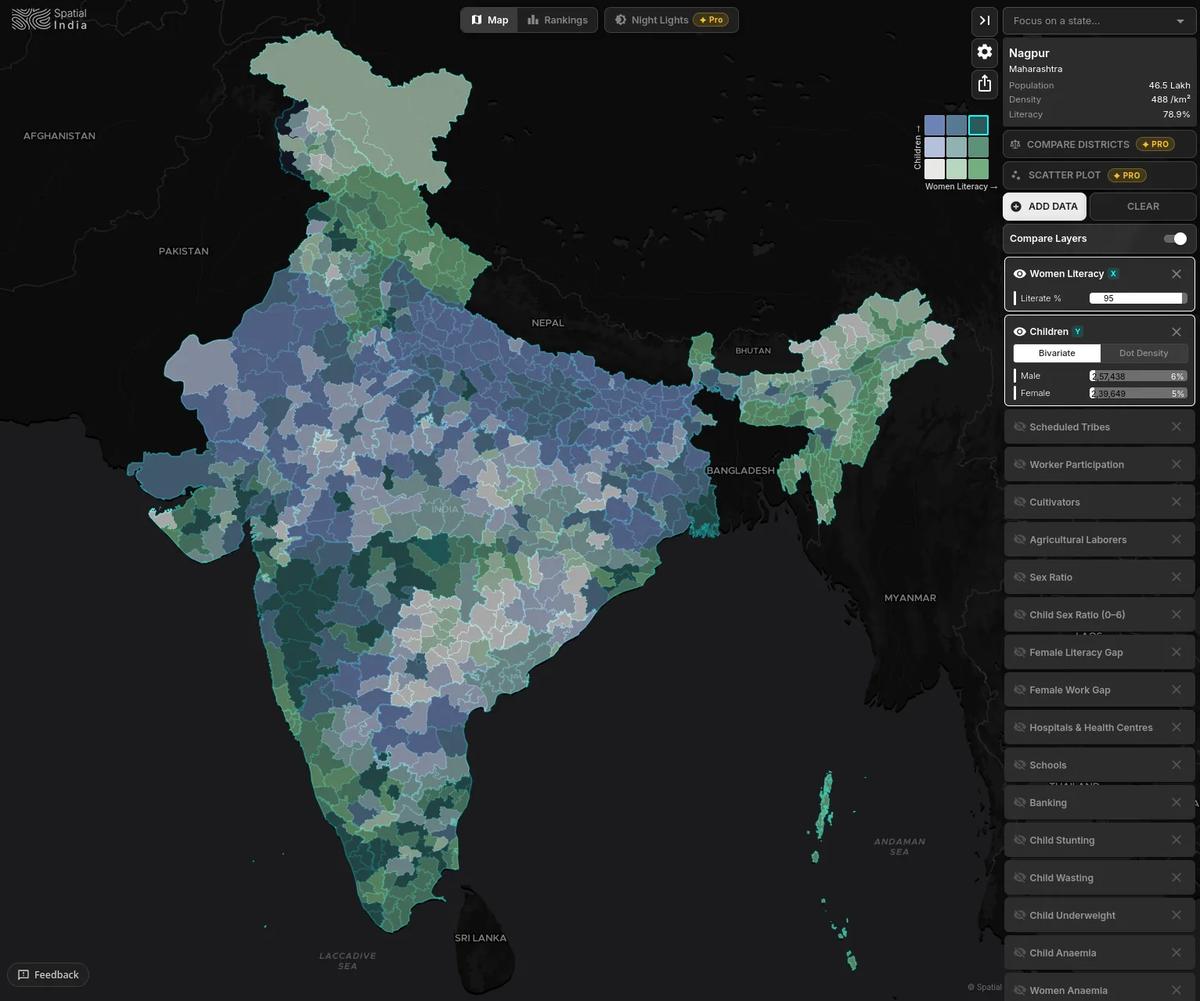
Bivariate analysis map

Cross-Dataset Correlation

Layer Census 2027 demographics with NFHS health data, VIIRS night-time lights, MSME density, and 74 other datasets — bivariate maps and scatter plots reveal what no single dataset can.

78 datasets10 sources808 districtsCensus of IndiaNFHS-5NASA VIIRSUdyam MSMENJDGAgricultural Census

Frequently Asked Questions

Phase I (houselisting) fieldwork runs April–September 2026. The full population count is scheduled for February–March 2027. Provisional results are expected by late 2028, with detailed district-level tables rolling out through 2029.

Census 2021 was postponed indefinitely due to the COVID-19 pandemic. Before that, India conducted a Census every 10 years since 1881 — until COVID-19 broke the streak. Census 2027 will be the first count in 16 years — the longest gap in modern Indian history.

For the first time since 1931, Census 2027 will enumerate all caste categories — including OBC (Other Backward Classes). Previous censuses only counted SC and ST populations. The data will inform reservation policies, welfare targeting, and political representation.

Lok Sabha seats have been frozen at 1971 population levels since the 42nd Amendment. Delimitation based on 2027 data could redistribute seats — potentially increasing northern India's representation at the expense of slower-growing southern states.

India had 640 districts in 2011. Since then, states have created over 160 new districts, bringing the total to approximately 800+. Census 2027 will be the first full enumeration at this new geographic resolution.

Yes — it's our primary roadmap milestone. Our architecture is purpose-built to ingest Census data the moment it's released. SpatialIndia will be among the first platforms in India to make Census 2027 data interactive and mappable at the district level.

Census 2027 is India's first digital census — data collection via mobile apps with GPS tagging replaces paper forms. It also adds the caste enumeration, covers 800+ districts (vs. 640), and is expected to show massive urbanisation and demographic shifts after 16 years.

Yes — fully free, no login required. SpatialIndia has Census 2011 population, literacy, sex ratio, worker classification, and more — mapped across all 640 districts with interactive choropleth, bivariate, and scatter plot visualisations.

Yes — all Census 2027 data on SpatialIndia will be free, just like our Census 2011 data today. No login, no paywall. Our mission is to make India's public data accessible to everyone.

Start by exploring Census 2011 data on SpatialIndia to understand baselines. Sign up for email notifications to be first when Census 2027 data goes live. Researchers and journalists can familiarise themselves with our choropleth, bivariate, and comparison tools now — they'll work identically with 2027 data.

Stay Updated

Be first when Census 2027 data drops.

Get notified when Census 2027 data goes live on SpatialIndia.

Join 500+ researchers tracking Census 2027

or
Launch App

Free to explore. No account required.